Time: Popularity:0times
Thin-film powder coating is a type of powder coating that can still achieve good hiding power and leveling under film thickness conditions significantly lower than those of conventional coatings (such as 30–60 μm).
This article systematically introduces the definition, characteristics, functions, selection considerations, and common problems and solutions related to thin-film powder coatings. It focuses particularly on the specific functions of thin-film powder coatings to help readers better understand what thin-film powder coatings are and what their characteristics are.
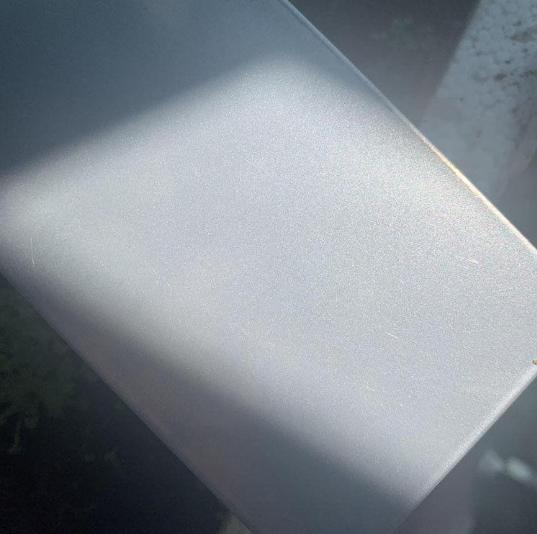
What Are Thin-Film Powder Coatings?
Thin-film powder coating is a functional powder coating that achieves good hiding power, leveling, and essential physical properties at film thicknesses significantly lower than those of conventional powder coatings through optimization of the resin system, pigment ratio, and particle size control.
Its value lies in reducing material consumption and energy costs per coated workpiece without sacrificing basic protective and decorative performance.
Characteristics of Thin-Film Powder Coatings
The main characteristics of thin-film powder coatings are as follows:
Lower Film Thickness: The typical design target is within the range of 30–60 μm, which is lower than the 60–80 μm thickness of conventional powder coatings.
Finer Particle Size: The average particle size is approximately 21 μm (compared with approximately 29 μm for conventional powder coatings), ensuring leveling and hiding performance in thin coatings.
Reduced Mechanical and Protective Performance: Scratch resistance, abrasion resistance, and corrosion protection are lower than those of conventional film-thickness coatings.
Limited Hiding Power: Bright or dark colors may provide insufficient coverage, and textured finishes such as sand texture and hammer tone generally cannot be produced.
Challenges in Film Thickness Uniformity: Finer powder may have poorer dry powder flowability, transfer efficiency, and storage stability, placing higher requirements on the stability of the powder supply system.
Functions of Thin-Film Powder Coatings
The main functions of thin-film powder coatings are reflected in the following aspects:
1. Reducing Powder Consumption
Through particle size refinement and formulation optimization, thin-film powder coatings can achieve effective coverage with thinner coating films. Research data show that, compared with conventional powder coatings, the average film thickness of fine thin-film powder coatings can be reduced by approximately 39.4 μm, saving up to 79.5% of powder consumption.
2. Reducing Overall Costs
Reducing film thickness directly decreases powder consumption per workpiece. Meanwhile, thin coatings heat up faster, helping shorten curing time or reduce baking energy consumption, thereby lowering overall coating costs.
3. Improving Coating Efficiency
Some thin-film products feature high powder transfer efficiency, good dispersion, and a high first-pass qualification rate, helping increase production line speed.
4. Maintaining Basic Protection and Decorative Performance
While reducing film thickness, thin-film powder coatings can still provide hiding power, leveling, adhesion, and a certain level of corrosion protection, meeting the basic requirements for indoor workpieces.
How to Select Thin-Film Powder Coatings
When selecting thin-film powder coatings, we may face difficulties in determining which products are suitable. Based on our industry experience, we recommend focusing on the following aspects when selecting thin-film powder coatings.
1. First Determine Whether Your Workpieces Are Suitable for Thin-Film Coatings
Thin-film powder coatings are not universal substitutes for conventional powder coatings. The following conditions must be met first:
(1) The Substrate Surface Must Be Smooth: Thin coatings cannot conceal roughness, scratches, or uneven defects on the substrate itself. Workpieces with uneven surfaces, such as castings or sheet materials with obvious grinding marks, are not suitable for thin-film coatings.
(2) The Corrosive Environment Must Not Be Harsh: Thin-film coatings are not suitable for environments with a corrosion category of C4 or above. They are more suitable for indoor applications or low-corrosion environments classified as C1–C3. If the workpiece may be exposed to outdoor conditions, its weather resistance must be evaluated separately.
(3) The Appearance Requirement Should Be "Smooth and Flat" Rather Than "Textured": Thin-film coatings generally cannot produce textured finishes such as sand texture and hammer tone. They are suitable for workpieces requiring a smooth surface or a high-leveling appearance.
(4) Light Colors and White Should Be Preferred: Dark or bright colors have a higher risk of insufficient hiding power under thin-film application. Light colors and white (such as RAL 9010 and RAL 9003) are more reliable choices for thin-film coatings.
2. Determine Key Parameters Based on Actual Requirements
When requesting technical data from suppliers, focus on the following items rather than simply looking at the "thin-film" product designation.
(1) Designed Film Thickness Range: Different suppliers have significantly different definitions of "thin-film" coatings. Some target a film thickness of around 30 μm, while some product data sheets specify a recommended film thickness of 50–60 μm. You must confirm whether the product's designed target film thickness matches your production line capabilities and workpiece requirements, and request actual performance data measured at that film thickness.
(2) Color Corresponding to Hiding Power: Clearly inform the supplier of the required color and request verification of its hiding power at the target film thickness. If the supplier can only guarantee hiding performance for white or light-colored thin-film coatings while your actual requirement is a dark color, the suitability must be reevaluated.
(3) Minimum Mechanical Performance Requirements: Thin-film coatings have lower scratch and abrasion resistance than conventional coatings. If the workpieces are subject to friction or impact during transportation or use, ask the supplier to confirm the impact resistance, bending performance, and adhesion data of its thin-film products at the target film thickness to determine whether they meet your minimum requirements.
(4) Particle Size Distribution: Thin-film coatings rely on finer powder particles to achieve leveling in thin layers. Pay attention to the supplier's particle size control. Thin-film powders generally have finer average particle sizes than conventional powders (approximately 25–35 μm for conventional powders, while thin-film powders may be controlled within the range of 15–20 μm). However, excessively fine particles may reduce powder transfer efficiency and increase the risk of storage agglomeration, so their process stability must be confirmed.
3. Calculate "Coating Cost" Rather Than "Powder Price"
The price per kilogram of thin-film powder is usually higher than that of conventional powder (due to higher resin content and more precise particle size control), but the cost per workpiece may be lower. When comparing prices, calculate the coating cost per square meter based on the same workpiece and the same target film thickness.
Common Problems and Solutions for Thin-Film Powder Coatings
The most common problems encountered during the use of thin-film powder coatings are mainly reflected in the following aspects. Based on our industry experience, we have proposed corresponding solutions to help effectively address powder coating problems you may encounter.
1. Poor Leveling (A Key Problem Specific to Thin-Film Coatings)
Symptoms: Severe orange peel and unevenness appear on the coating surface, making it impossible to achieve a smooth appearance at the target thin-film thickness.
Main Causes: During thin-film application, both the available leveling time and the amount of molten material are reduced. Melt viscosity becomes more sensitive to temperature, and the driving force for leveling is insufficient. Research clearly indicates that poor coating leveling is one of the main problems associated with thin-film coating systems.
Solutions:
Select a resin system specifically designed for thin-film coatings, or require the supplier to provide actual leveling data measured at the target film thickness.
Confirm that the powder particle median diameter has been reduced (for example, controlled below 25 μm) and that the particle size distribution is relatively narrow to improve melting uniformity in thin coatings.
Within the operating limits of the production line, appropriately extend the leveling time or optimize the heating curve.
2. Insufficient Hiding Power / Substrate Show-Through
Symptoms: The coating cannot completely cover the substrate's base color, particularly on dark or bright-colored workpieces, resulting in uneven appearance or visible substrate show-through.
Main Causes: When film thickness is reduced, the amount of pigment deposited per unit area decreases. If the powder formulation does not provide sufficient hiding power, or the color itself has inherently weak hiding power, the substrate is highly likely to show through under thin-film application.
Solutions:
Give priority to light-colored or white systems. For dark and bright colors, require the supplier to provide hiding power verification data for the specific color at the target film thickness.
If dark colors must be used, ask the supplier to improve pigment dispersion or hiding power in the formulation, such as by using a dedicated high-hiding-power thin-film formulation.
Appropriately increase powder output or adjust spray gun travel speed during application, while paying attention to the maximum film thickness to avoid losing the cost advantages of thin-film coating.
3. Reduced Powder Transfer Efficiency and Poor Film Thickness Uniformity
Symptoms: Insufficient powder deposition occurs in certain areas of the workpiece, film thickness fluctuates significantly, or the proportion of recycled powder increases abnormally.
Main Causes: Thin-film powders have finer particle sizes. Excessively fine particles (such as those below 10 μm) are easily blown away by airflow after becoming charged and are less likely to adhere to the workpiece. Meanwhile, changes in the flowability of fine powder place higher requirements on the stability of the powder supply system.
Solutions:
Confirm the supplier's ability to control particle size distribution and avoid an excessively high proportion of ultrafine powder.
Optimize spray gun parameters: appropriately adjust voltage and powder output air pressure to improve the charging and deposition efficiency of fine powder.
Ensure that the powder supply system (fluidizing hopper and Venturi system) operates stably, and that powder hoses are free from wear and powder accumulation.
4. Particle / Protrusion Defects
Symptoms: Raised particles appear on the coating surface, damaging its smooth appearance.
Main Causes: Thin-film coatings have extremely low tolerance for particles. Coarse particles that may be concealed under conventional film thicknesses will directly protrude from the surface under thin-film application. These particles may originate from unmelted resin agglomerates in the powder, mechanical impurities introduced during production or application, or excessively coarse powder particles.
Solutions:
Require the supplier to strengthen finished product sieving (such as using 100–140 mesh screens) and production environment control.
Inspect the recycled powder system before spraying to prevent fragments of cured coating from entering the powder.
Clean conveyor chains and hanging fixtures to prevent cured powder from falling onto workpiece surfaces.
5. Reduced Adhesion and Mechanical Performance
Symptoms: Coating detachment during cross-cut testing, cracking under impact, or coating damage during subsequent workpiece processing.
Main Causes: After film thickness is reduced, the coating's cohesive strength and mechanical anchoring to the substrate are inherently weaker than those of conventional film-thickness coatings. If pretreatment does not meet the required standards or curing is insufficient, adhesion problems are more likely to occur in thin-film systems.
Solutions:
Strictly control pretreatment: Ensure that degreasing and phosphating/passivation quality consistently meet the required standards. Thin-film coatings cannot compensate for pretreatment deficiencies.
Use an oven temperature profiler to verify that the actual metal temperature of the workpiece reaches the curing conditions specified by the supplier.
If the workpiece requires bending or impact resistance, request actual bending and impact test data at the target film thickness from the supplier during the sample testing stage to confirm whether the minimum requirements are met.
Choose High-Quality Thin-Film Powder Coatings for Precision Coating and Efficient Production
Thin-film powder coatings are specifically designed for applications with high requirements for coating thickness, surface smoothness, and material utilization. They offer good leveling, excellent coverage, and stable application performance, forming uniform and continuous protective coatings at lower film thicknesses. They are widely used in home appliances, metal furniture, automotive components, electronic equipment, and various precision metal products.
With more than 20 years of experience in powder coating research, development, and manufacturing, we can provide customized thin-film powder coating solutions based on substrate characteristics, coating processes, target film thickness, and product performance requirements, helping customers optimize coating results, improve material utilization, and reduce production costs.
Choose our thin-film powder coatings to create greater value for your products through more precise coating control, more stable coating quality, and higher production efficiency. Contact us to obtain professional product recommendations and customized solutions!



Company Phone
+86-21-6420 0566
Working hours
Monday to Friday
Mobile phone:
13816217984
Email:
info@qinsun-lab.com