Time: Popularity:0times
Automotive parts powder coating is an environmentally friendly coating material applied in powder form by electrostatic spraying to the surfaces of metal automotive components, such as vehicle frames, chassis, wheel rims, and engine covers. After high-temperature curing, it forms a protective film that provides corrosion resistance, weather resistance, wear resistance, and decorative protection.
This article systematically introduces the concept, features, functions, applications, selection considerations, and solutions to common problems associated with automotive parts powder coating. It focuses on the specific applications of automotive parts powder coating to help readers better understand what it is, as well as its features and functions.
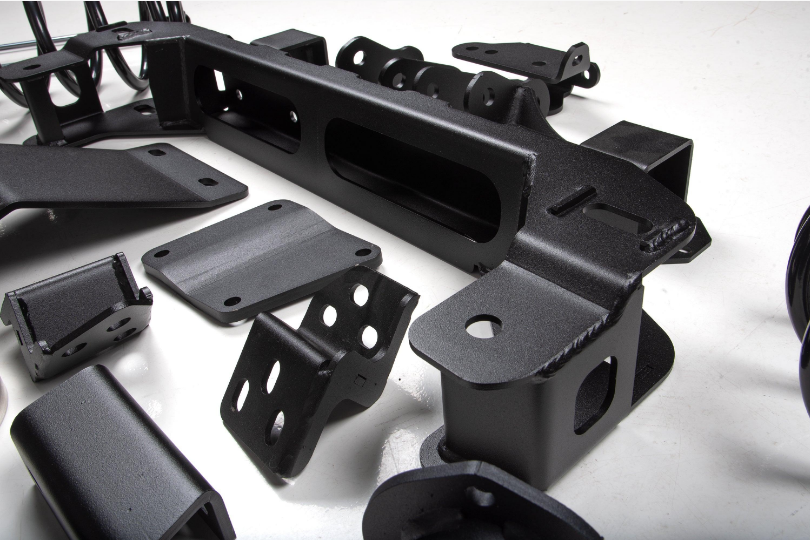
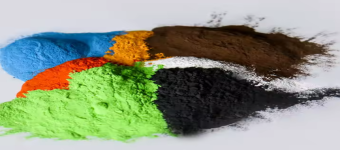
Automotive parts powder coating is a coating material composed of 100% solids and containing no organic solvents. It exists in the form of fine powder and is applied to the surfaces of metal automotive components, such as vehicle frames, chassis, wheel rims, engine covers, brackets, and springs, through electrostatic spraying and other methods. It is then heated in an oven to melt, flow, and cure, forming a continuous, durable protective and decorative film.
The main features of automotive parts powder coating are as follows.
1. Heavy-Duty Corrosion Protection and Stone-Chip Resistance
Automotive parts powder coatings offer excellent salt spray resistance. Specialized automotive powder coatings can achieve up to 1.200 hours, while general automotive-grade powder coatings typically require 500 hours of salt spray resistance, with corrosion width at the scribe limited to 3 mm or less. Wheel rim powder coatings can achieve up to 1.000 hours.
They provide excellent stone-chip resistance, withstanding impacts from flying stones during driving and protecting components such as the chassis and springs.
They also offer good resistance to chemical media such as fuels, battery acid, and engine oil.
2. Mechanical Strength and Processing Adaptability
Impact resistance typically reaches at least 50 kg·cm, passing both direct and reverse impact tests, with pencil hardness ranging from H to 2H.
Excellent flexibility: Powder coatings used on vehicle frame longitudinal beams must meet post-coating bending requirements without cracking. The cupping test result should be at least 7 mm, and adhesion can reach Grade 0 in the cross-cut test.
3. Weather Resistance and Appearance
Polyester powder coatings for exterior automotive components can withstand more than 60 months of Florida exposure, with gloss retention exceeding 80%. Acrylic clear powder coatings can achieve gloss retention of at least 80% after 500 hours of QUV-B testing.
Gloss can be adjusted from matte finishes of 0–30 GU to high-gloss finishes exceeding 90 GU. Excellent flow and leveling properties can achieve Class A surface appearance quality.
Acrylic clear powder coatings are specifically used for wheel rim clear coating, providing excellent image clarity and a crystal-clear finish.
4. Process Compatibility
Low-temperature curing capability: Some automotive parts powder coatings can cure at 150–160°C, reducing energy consumption and helping preserve the toughness of aluminum wheel rims.
They can be used in combination with electrophoretic primer to form an “electrophoretic coating + powder coating” composite system, combining corrosion protection with appearance quality.
They adapt well to rough cast surfaces, providing uniform coverage on surfaces such as cast-iron engine blocks.
5. Environmental Benefits and Efficiency
They contain 100% solids, require no solvents, and produce virtually zero VOC emissions.
Powder recovery and reuse rates can exceed 97%, making them suitable for automated production lines.
The main functions of automotive parts powder coating are reflected in the following aspects.
1. Protective Functions
Heavy-duty corrosion protection: Forms a barrier against moisture, oxygen, salt spray, acids, alkalis, and other corrosive media, preventing corrosion of metal components such as frames, chassis, and suspension parts.
Stone-chip resistance: The tough coating withstands high-speed impacts from flying stones during driving, protecting vulnerable areas such as the chassis and wheel rims.
Chemical resistance: Resists the effects of fuel, engine oil, brake fluid, battery acid, and other chemical media, preventing coating softening and peeling.
Weather protection: Resists ultraviolet radiation, temperature fluctuations, rain, and snow, slowing fading and aging of exterior components.
Extended service life: These protective properties significantly extend the service life of automotive components and reduce maintenance and replacement costs.
2. Functional Benefits
Electrical insulation: Some powder coatings provide electrical insulation for components such as battery pack housings and motor parts.
Vibration damping and noise reduction: Certain coatings offer damping properties and can be used on springs, brackets, and other components to reduce vibration and noise.
Wear resistance and lubrication: Specialized formulations can reduce friction and are suitable for transmission components, hinges, and similar parts.
Thermal conductivity and heat dissipation: Specialized functional powder coatings can be used on components requiring thermal management, such as battery modules.
Identification and differentiation: Different colors can distinguish component functions, specifications, or safety warnings.
3. Decorative Functions
Improved appearance: A wide range of colors and adjustable gloss levels enhance the appearance of wheel rims, grilles, decorative parts, and other components.
Varied textures: Available finishes include high gloss, matte, metallic sparkle, sand texture, and hammer texture.
Clear-coat protection: Acrylic clear powder coatings are used on wheel rims to provide excellent image clarity and a crystal-clear finish.
Brand recognition: Consistent coating colors and textures help establish a recognizable visual identity for automotive brands.
Where is automotive parts powder coating used? Its main applications include the following areas.
1. Chassis and Undercarriage Components
This is one of the largest application areas for powder coatings in the automotive industry. These coatings primarily protect against stone chips, salt spray, and chemical corrosion.
Battery pack underbody shields: Key protective components for electric vehicles.
Suspension and braking systems: Coil springs, shock absorbers, and torsion bars require both flexibility and corrosion resistance. Brake lines and oil filters are also traditional applications.
Drive shafts and constant-velocity joints: Outer joint components and intermediate drive shafts can be powder coated, with coating thicknesses of 40–150 μm, combining corrosion protection with production efficiency.
2. Engine and Engine Compartment Components (Heat and Oil Resistance)
The engine compartment is exposed to high temperatures and oil-based fluids, placing demanding requirements on coatings.
Engine blocks and valve covers: Sandblasted cast-iron engine blocks can be directly coated with epoxy powder. Short-wave infrared rapid curing at 160°C for 8 minutes can be used. The coating must withstand high-speed machining without chipping or flaking.
Oil and air filters: These components require oil resistance, and the coating must withstand bending during assembly without cracking.
3. Functional and Transmission Components (Lubrication and Noise Reduction)
The self-lubricating and friction-reducing properties of powder coatings can replace direct metal-to-metal contact in certain applications.
Spline shafts and steering shafts: Provide self-lubrication without additional grease and improve wear resistance, potentially extending spline shaft service life by seven times.
Sliding door tracks and seat rails: Offer a low coefficient of friction, salt spray resistance of 2.000 hours, and excellent noise reduction.
Small interior components: Concealed components such as screws, retaining clips, springs, and seat belt buckles can also be powder coated to provide lubrication and corrosion protection.
4. Exterior and Decorative Components (Weather Resistance and Appearance)
These components are directly exposed to outdoor conditions, so polyester or acrylic powder coating systems are preferred.
Wheel rims and brake calipers: Aluminum alloy wheel rims are among the most popular applications for powder coatings. Powder coating enhances appearance and protects against brake dust and curb scratches. Matte clear powder coatings are widely used on aluminum wheel rims and various exterior components, with low-temperature curing characteristics at 170°C.
Exterior metal components: Roof racks, door and window components, windshield wipers, bumpers, grilles, and door handles require excellent UV resistance and appearance quality. These components account for approximately 15% of automotive powder coating applications.
Headlamp reflectors: Coatings must ensure high reflectivity and durability.
When selecting automotive parts powder coating, it can be difficult to determine which product is appropriate. Based on our industry experience, we recommend focusing on the following considerations.
1. Select the Resin System According to Component Location and Function
Operating conditions vary significantly across different automotive components, and resin selection should correspond to their specific requirements.
(1) Chassis and Undercarriage Components (Heavy-Duty Corrosion Protection and Stone-Chip Resistance)
These components represent one of the largest application areas for automotive powder coatings. They are exposed to salt spray, flying stones, mud, and water over extended periods, making heavy-duty corrosion protection and stone-chip resistance essential.
Pure epoxy systems or a two-coat system consisting of epoxy primer powder and polyester topcoat powder are recommended.
(2) Engine Compartment Components (Heat and Oil Resistance)
Engine compartment components are exposed to high temperatures and engine oil or fuel. Epoxy systems are preferred because of their excellent chemical resistance and resistance to hot oil. They are suitable for oil and air filters, shock absorbers, engine blocks, and similar components.
During selection, confirm the powder coating's hot-oil resistance and suitability for rough cast surfaces.
(3) Springs and Torsion Bars (Flexibility Is the Priority)
Coil springs and shock absorbers undergo repeated deformation during operation. Their coatings must accommodate this deformation without cracking.
(4) Exterior and Decorative Components (Weather Resistance and Appearance)
Visible components such as wheel rims, grilles, roof racks, and windshield wiper arms must resist UV radiation and maintain their appearance. Polyester systems are the mainstream choice.
(5) New Energy Vehicle Components (Electrical Insulation)
Electric vehicle batteries and motor components require electrical insulation. Key selection factors for insulating powder coatings include breakdown voltage and film thickness requirements.
According to industry testing, the dielectric strength of powder coatings is approximately 41–50 kV/mm. To withstand 3 kV, the coating thickness must exceed 150 μm; to withstand 5 kV, it must exceed 200 μm.
2. Verify Key Selection Parameters
(1) Compatibility with Pretreatment
The corrosion resistance of powder coatings depends heavily on pretreatment. Automotive components typically undergo phosphating, using either zinc phosphate or iron phosphate systems.
Some advanced production lines apply an electrophoretic primer before powder topcoating, forming an “electrophoretic coating + powder coating” composite system.
(2) Curing Conditions
Confirm that the powder coating's curing window matches the production line's oven conditions. Common curing conditions are 180–190°C for 15–20 minutes.
For components sensitive to high temperatures, consider low-temperature-curing powder coatings.
(3) Deep-Cavity Coverage
This is a key limitation of powder coating. Components with deep cavities or complex internal structures, such as seat rails, may have areas that are difficult to cover through electrostatic spraying, leaving the interiors vulnerable to rust.
For components with complex geometries, electrophoretic deposition (EDP) is a more reliable corrosion protection solution. Before selecting a coating, assess whether the component geometry is suitable for powder spraying.
The most common problems encountered when using automotive parts powder coating are outlined below. Based on our industry experience, we provide corresponding solutions to help address these coating issues.
1. Coating Cracking During Subsequent Forming
Problem description: After coating, components undergo subsequent forming operations such as bending, flanging, or hemming. The coating cracks or fractures along the formed areas. Notably, these components may pass adhesion and impact tests before forming.
Possible causes:
Excessive film thickness: This is the most common cause. An overly thick coating develops greater internal stress and significantly reduced effective elongation. Even a powder coating marketed as “flexible” may crack.
Overcuring: Excessive baking time or an excessively high actual workpiece temperature increases crosslink density and makes the coating brittle.
Insufficient bending radius: The outer coating surface at a bend experiences the greatest tensile strain. If the bending radius is smaller than the coating's tested deformation capacity, cracking may be unavoidable.
Solutions:
Reduce film thickness and strictly maintain it within the recommended range for the powder coating.
Use an oven temperature profiler to measure the actual metal temperature of the workpiece and prevent overcuring.
Prioritize forming the component before coating to eliminate post-curing deformation strain through process sequencing.
If post-coating forming is unavoidable, select a specialized flexible powder coating and confirm that its elongation data matches the bending radius.
2. Coating Failure Around Welds
Problem description: Poor adhesion, blistering, and premature corrosion occur around welds, joints, and heat-affected zones, while the remaining areas of the component perform normally.
Possible causes:
Surface contamination: Even when welds appear acceptable, they may retain oil, welding slag, or oxide scale that pretreatment cannot completely remove.
Complex geometry: Irregular weld shapes can create Faraday shielding zones, resulting in insufficient powder deposition.
Effects of thermal history: The metal microstructure in the heat-affected zone differs from that of the base material, potentially affecting coating adhesion.
Solutions:
Strengthen pretreatment around welds and perform mechanical grinding or localized sandblasting when necessary.
Inspect film thickness around welds and apply additional coating where necessary.
For critical structural components, consider applying an electrophoretic primer after welding, followed by powder topcoating. Electrophoretic coating provides better coverage of welds than electrostatic powder spraying.
3. Pinholes and Craters
Problem description: Circular depressions appear on the coating surface, sometimes with visible contamination at the center. Alternatively, numerous tiny pinholes extend down to the substrate, affecting corrosion resistance and appearance.
Possible causes:
Surface contamination: Residual engine oil, silicone release agents, or grease prevent the powder from wetting the substrate. This is a primary cause of craters.
Residual pretreatment solution: Insufficient rinsing after phosphating allows residual solution to volatilize during curing and break through the coating, forming pinholes.
Contaminated compressed air: Oil and moisture in the air supply introduce contaminants.
Outgassing from cast or galvanized components: Porous substrates release gas at curing temperatures, which breaks through the coating.
Solutions:
Inspect and drain oil-water separators every shift to ensure clean compressed air.
Prevent silicone-based substances from entering the spraying area.
Improve rinsing after phosphating and use deionized water for the final rinse to ensure no residual solution remains.
Pre-bake cast and galvanized components to release trapped gases before coating.
4. Orange Peel
Problem description: The coating surface develops a texture resembling orange peel, reducing gloss and affecting the appearance of high-gloss exterior components such as wheel rims and decorative parts.
Possible causes:
Excessive film thickness: An overly thick powder layer lacks sufficient flow during melting. The leveling process ends prematurely, locking in the surface texture.
Improper electrostatic parameters: Excessively high voltage causes uneven powder distribution, creating localized peaks and valleys.
An unsuitable curing profile: If the workpiece heats up too quickly, the powder's leveling window becomes shorter.
Solutions:
Reduce film thickness, targeting 50–75 μm as the optimal leveling range for standard polyester powder coatings on smooth surfaces.
Reduce spray gun voltage, potentially to 60–70 kV, and control powder output to avoid excessive powder deposition in pursuit of coverage.
Use an oven temperature profiler to verify the workpiece's heating curve and ensure sufficient time for leveling.
5. Poor Adhesion (Impact Test Failure)
Problem description: The coating passes the cross-cut adhesion test but repeatedly fails impact testing. Although the coating appears well bonded macroscopically, its cohesive strength may be insufficient or its elastic properties may not match those of the substrate.
Possible causes:
Overcuring: Excessive crosslink density increases coating brittleness, causing cohesive failure under impact.
Excessive pretreatment film thickness: For example, an overly thick chromate conversion film on aluminum can create a brittle layered structure that cracks under impact.
An unsuitable resin-to-curing-agent ratio: Excessive crosslink density in the formulation itself makes the coating brittle.
Solutions:
Reduce curing temperature or shorten curing time to prevent overcuring.
Check the pretreatment film thickness and keep it within the process window.
Consult the powder coating supplier about the formulation and replace the coating system with a more flexible alternative if necessary.
Automotive components have strict requirements for corrosion resistance, wear resistance, adhesion, and appearance consistency. We specialize in the research, development, and production of industrial powder coatings and can provide customized powder coating solutions based on the substrate materials, operating environments, and coating processes of different automotive components. Our solutions address the diverse requirements of automotive parts for protection, decorative finishes, and mass production.
Contact us today for product recommendations, customized solutions, and quotations for automotive parts powder coating. We provide reliable coating support for your automotive manufacturing projects!


Company Phone
+86-21-6420 0566
Working hours
Monday to Friday
Mobile phone:
13816217984
Email:
info@qinsun-lab.com