Time: Popularity:0times
FEVE fluorocarbon powder coating is an environmentally friendly powder coating based on FEVE resin (fluoroolefin-vinyl ether copolymer) and containing no solvents. After high-temperature curing, it forms a coating with ultra-high weather resistance (with an outdoor service life of more than 20 years), excellent corrosion resistance, and self-cleaning performance.
This article systematically introduces the concept, characteristics, functions, applications, precautions for selecting powder coatings, and solutions to common problems of FEVE fluorocarbon powder coating, with a focus on the specific applications of FEVE fluorocarbon powder coating, to help everyone better understand what FEVE fluorocarbon powder coating is and what its characteristics and functions are.
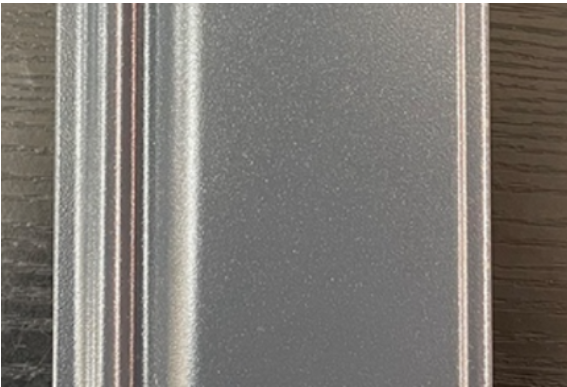
What Is FEVE Fluorocarbon Powder Coating
FEVE fluorocarbon powder coating is a thermosetting powder coating that uses FEVE resin (fluoroolefin-vinyl ether alternating copolymer) as the key film-forming material and is formed through a crosslinking reaction with a curing agent. Essentially, it applies this ultra-weather-resistant fluorocarbon resin, FEVE, in the environmentally friendly form of 100% solid powder.
Characteristics of FEVE Fluorocarbon Powder Coating
The main characteristics of FEVE fluorocarbon powder coating are as follows.
1. Ultra-Long Weather Resistance
This is the most prominent characteristic of FEVE fluorocarbon powder coating. Its excellent performance originates from the stable C-F (carbon-fluorine) covalent bonds in FEVE resin, which give the coating extremely strong resistance to ultraviolet radiation. Specific performance includes:
(1) Excellent Gloss and Color Retention: In accelerated aging tests, the gloss retention rate remains above 90% after 4.000 hours of testing; other data show that after 3.000 hours of accelerated weathering testing, the gloss retention rate is 82%–90%, with almost no aging occurring.
(2) Long-Term Durability: Based on its outstanding aging resistance, the coating's predicted durability can reach more than 30 years, far exceeding that of ordinary weather-resistant powder coatings and polyurethane coatings.
2. Environmental Protection and High Efficiency
As a 100% solid powder, FEVE powder coating inherits the environmentally friendly and highly efficient characteristics of powder coatings:
(1) Environmental Friendliness: It contains no organic solvents, has no safety hazards, does not pollute the environment, and the powder generated during spraying can be recycled and reused, with a utilization rate of up to 99%.
(2) Energy Saving and High Efficiency: Compared with thermoplastic PVDF powder coating, its curing temperature can be reduced by 20–40°C, and the curing time can be shortened by 2–5 minutes, significantly improving coating efficiency and reducing energy consumption.
3. Corrosion Resistance and Physical Properties
FEVE fluorocarbon powder coating also provides excellent protective performance:
(1) Excellent Chemical Corrosion Resistance: It can resist the erosion of various chemicals and has excellent salt spray resistance, making it one of the ideal anti-corrosion coatings for high-end marine equipment.
(2) Compliance with Strict Standards: Some pure FEVE fluorocarbon powder coatings can meet the stringent requirements of high-end architectural aluminum profile quality standards such as QUALICOAT.
Functions of FEVE Fluorocarbon Powder Coating
The main functions of FEVE fluorocarbon powder coating are reflected in the following aspects:
1. Ultra-High Weather Resistance and Aging Resistance
This is the core value of FEVE fluorocarbon powder coating. Relying on the stable carbon-fluorine (C-F) bonds in FEVE resin, the coating can extremely effectively resist UV degradation. Its 3.000-hour accelerated weathering test shows that the gloss retention rate can still reach 82%–90%, so it is widely regarded as an ideal choice for high-end marine vessels, architectural aluminum profiles, and other fields.
2. Corrosion Protection and Decoration
Its corrosion resistance is also excellent. It can withstand 4.000 hours in salt spray testing without significant change, effectively preventing the substrate from rusting. Combined with excellent gloss and color retention and customizable leveling effects, it can replace liquid fluorocarbon paint and achieve an environmentally friendly “powder replacing paint” upgrade in outdoor applications.
3. Environmental Protection and High Efficiency
As a 100% solid powder, it contains no organic solvents and has nearly zero VOC emissions, with a utilization rate of up to 99%. At the same time, compared with traditional PVDF fluorocarbon coatings, its curing temperature can be reduced by 20–40°C and the curing time shortened by 2–5 minutes, making it energy-saving and highly efficient.
Applications of FEVE Fluorocarbon Powder Coating
Where is FEVE fluorocarbon powder coating used? Its specific application areas are as follows:
1. Architectural Aluminum Profiles and Curtain Walls
This is its core and most mature market. National and industry standards, such as GB/T 5237.4 and T/CECS 10388-2024. explicitly list it as one of the designated coatings for architectural spray-coated profiles. It is mainly used for high-rise building exterior walls, doors and windows, aluminum panel curtain walls, and other applications with extremely high requirements for durability and appearance, and can meet the strictest North American architectural specification requirements such as AAMA 2605.
2. Marine and Heavy-Duty Corrosion Protection Projects
In high-end vessels, offshore platforms, coastal facilities, and other fields, it is often used as the topcoat in heavy-duty corrosion protection coating systems. This is due to its excellent salt spray resistance and ultra-long aging resistance. The long-term performance of some products in rigorous accelerated aging tests is considered superior to that of polyurethane coatings.
3. Automobiles and Transportation Vehicles
It is also used for exterior components of automobiles with high requirements for weather resistance and chemical resistance, such as vehicle bodies, doors, bumpers, wheels, and emblems, as well as some interior components such as dashboards. Coating systems using FEVE topcoats can have an expected service life more than five times that of traditional acrylic polyurethane coatings.
4. Other Industrial and Equipment Applications
These applications include the protection of bridge steel structures and construction machinery, as well as household appliances and industrial equipment that require weather resistance and decorative performance.
How to Choose FEVE Fluorocarbon Powder Coating
When selecting FEVE fluorocarbon powder coating, we may face the problem of not knowing how to choose. Based on our industry experience, we recommend focusing on the following aspects when selecting FEVE fluorocarbon powder coating.
1. Determine the Application Grade
This is the core factor determining performance and cost.
(1) Pure FEVE Fluorocarbon Powder Coating: The preferred choice for pursuing ultimate weather resistance and durability. It can easily meet the highest architectural standard, AAMA 2605 (10-year gloss retention rate ≥50%), with an outdoor service life of more than 20 years. However, it has inherent deficiencies in physical and mechanical properties, such as poor impact resistance and inadequate adhesion to aluminum alloys. Strict yellow chromating treatment of the substrate is usually required to ensure long-term adhesion, which introduces environmental risks. It is suitable for applications such as landmark building curtain walls that have extremely high service-life requirements and can accept special pretreatment.
(2) FEVE-Modified Polyester Powder Coating: This is the mainstream solution more widely used in China. By modifying FEVE with polyester or acrylic resin, it can significantly improve the coating's adhesion, toughness, and cost-effectiveness while retaining excellent weather resistance. Although its weather resistance may be slightly inferior to that of pure FEVE, it is sufficient to meet the requirements of most high-performance architectural applications. It also offers more user-friendly application processes and higher tolerance to pretreatment conditions. It is suitable for conventional architectural aluminum profiles, doors and windows, and other applications with high requirements for overall performance.
2. Consider Appearance and Color Requirements
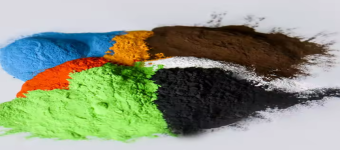
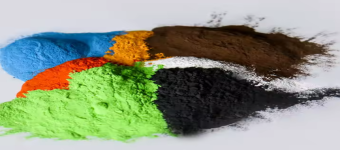
FEVE fluorocarbon powder coating has unique advantages in terms of decorative performance. Its resin itself is transparent and can achieve high gloss, making it highly suitable for producing bright colors, dark colors, and metallic finishes. In recent years, technological advances have also expanded the gloss range, such as 5–85°, and enabled the simulation of special textures such as anodized aluminum. If your project has strict design requirements for color and texture, the FEVE system offers advantages over traditional PVDF coatings.
3. Evaluate Application Conditions and Substrate
(1) Application Method: As a thermosetting powder coating, FEVE must be electrostatically sprayed in a factory and baked and cured at a high temperature of approximately 180–200°C. This determines that it is mainly suitable for factory pre-coating of aluminum profiles and sheets and is not suitable for on-site application.
(2) Substrate and Pretreatment: For aluminum profiles, particular attention should be paid to the compatibility of the pretreatment process. When using pure FEVE coatings, the traditional yellow chromating process faces environmental pressures, while new chromium-free pretreatment technologies, such as tannic acid-titanium systems, have relevant standards such as T/CECS 10388-2024 regulating their compatibility with FEVE powder. When selecting a product, ensure that the powder coating is compatible with your pretreatment production line.
Common Problems and Solutions for FEVE Fluorocarbon Powder Coating
The most common problems encountered during the use of FEVE fluorocarbon powder coating mainly include the following aspects. Based on our industry experience, we propose corresponding solutions to help effectively solve powder coating problems you may encounter.
1. Poor Adhesion / Coating Peeling
Appearance: Poor adhesion between the coating and metal substrates such as aluminum alloys; the coating is prone to cracking or peeling off entirely after impact.
Possible Causes: FEVE fluorocarbon resin has high rigidity and low polarity, resulting in poor wettability with metal substrates and inherently poor adhesion. Pure FEVE powder has particularly weak adhesion to aluminum alloys. Traditional pretreatment relies on yellow chromating to ensure adhesion, but this process has been prohibited due to environmental concerns, while chromium-free alternatives are not yet fully mature.
Solutions:
Select FEVE-modified polyester/acrylic hybrid powder and use the underlying resin to improve adhesion, while allowing FEVE to migrate to the surface to provide weather resistance.
Add epoxy resin, toughening resin, or nanofillers for formulation modification to improve the bonding strength between the coating and substrate.
Explore new pretreatment technologies, such as metal-organic framework films, to replace yellow chromating.
2. Curing Yellowing
Appearance: The coating turns yellow after high-temperature baking and curing, especially in light-colored and white coatings.
Possible Causes: FEVE resin is prone to moisture absorption, and moisture reacts with the curing agent, resulting in yellowing. Benzoin (defoamer) in the formulation is also an important factor contributing to yellowing.
Solutions:
(1) Strictly control the powder storage environment, keep it dry, and prevent the resin from absorbing moisture.
(2) Select wax-based defoaming and degassing agents to replace benzoin or formulate them appropriately with benzoin, minimizing the amount of benzoin used as much as possible.
(3) Optimize the curing process and avoid excessively high temperatures or excessively long curing times.
3. Surface Pinholes
Appearance: Small pinholes or bubbles appear on the coating surface after curing, especially when the coating is sprayed too thickly.
Possible Causes: Small-molecule compounds are released during the crosslinking reaction of the curing agent. When the coating is too thick, gases cannot escape completely. Moisture absorption by the resin results in a high moisture content, and the vaporization of moisture during high-temperature curing can also produce pinholes.
Solutions:
(1) Strictly control the spray film thickness and avoid applying an excessively thick coating in a single spray.
(2) Ensure that the powder is stored in a dry environment and check the moisture content of the powder before use.
(3) Optimize the selection and dosage of defoaming and degassing agents in the formulation.
4. Poor Impact Resistance
Appearance: The coating is prone to cracking after impact, and its impact resistance is generally <30 cm (tested according to GB/T 1732).
Possible Causes: FEVE fluorocarbon resin has a highly rigid molecular structure. After film formation, it has insufficient toughness, resulting in high coating brittleness.
Solutions:
(1) Add toughening resin or low-molecular-weight high-elasticity rubber to the formulation to improve coating toughness.
(2) Select hybrid FEVE powder and use the underlying resin to compensate for the insufficient impact resistance of pure FEVE.
5. Insufficient Coating Density / Poor Water Penetration Resistance
Appearance: The coating is insufficiently dense, allowing corrosive media to penetrate easily into the substrate and affecting long-term protection.
Possible Causes: After curing, the film formed by FEVE powder coating may have insufficient density and poor resistance to water penetration. Some studies indicate that the film-forming density of water-based FEVE fluorocarbon coatings is also inferior to that of solvent-based coatings.
Solutions:
(1) Use nanofiller modification, such as fluorinated graphene and nano-zirconium phosphate, to fill micropores in the coating and improve density and barrier properties.
(2) Optimize the ratio of pigments and fillers and the dispersion process to make the coating structure denser.
(3) Use a multi-layer coating system (primer + topcoat) to compensate for insufficient density of a single layer.
If you encounter some difficult-to-resolve problems during the use of FEVE fluorocarbon powder coating, please feel free to contact us at any time to obtain professional technical support, discuss solutions together, and promote the development of the powder coating industry.
We hope this article can provide you with a professional and reliable reference regarding the powder coating industry. We sincerely welcome you to actively consult us regarding powder coating product performance, industry standards, application methods, precautions, or any other related questions. We look forward to hearing from you at any time through messages or direct contact, so that we can provide you with more detailed product information, demonstration videos, or customized solutions to help you fully understand all the functions and advantages of our products.


Company Phone
+86-21-6420 0566
Working hours
Monday to Friday
Mobile phone:
13816217984
Email:
info@qinsun-lab.com