Time: Popularity:0times
PVC powder coating (Polyvinyl Chloride powder coating) is widely used in wire products, protective fencing, household appliance components, pipeline anti-corrosion systems, and outdoor facilities due to its excellent corrosion resistance, outstanding flexibility, good mechanical properties, and cost-effective performance.
This article provides a comprehensive introduction to PVC powder coatings, including their definition, characteristics, functions, application fields, selection considerations, and common troubleshooting methods. Special emphasis is placed on the wide range of applications of PVC powder coatings, helping readers better understand what PVC powder coating is, its key features, and where it is most commonly used.
PVC powder coating is a thermoplastic powder coating formulated primarily with polyvinyl chloride (PVC) resin, combined with plasticizers, stabilizers, pigments, fillers, and other additives.
Unlike thermosetting powder coatings, which undergo chemical crosslinking during curing, PVC powder coatings form a coating through a physical melting and cooling process. During heating, the PVC resin softens, melts, and flows to create a smooth surface. Once cooled, it forms a continuous protective coating.
Because no chemical crosslinking occurs, the coating can be reheated and remelted if necessary, providing unique repair and processing advantages.
1. Excellent Flexibility
PVC powder coatings offer outstanding flexibility and can withstand bending up to 180 degrees without cracking.
This makes them ideal for:
Wire baskets
Springs
Wire products
Metal mesh components
Deformable metal parts
The coating remains intact even when the substrate is subjected to significant bending and deformation.
2. Superior Weather and Corrosion Resistance
PVC powder coatings provide excellent resistance to:
Acids
Alkalis
Salt spray
Moisture
Ultraviolet radiation
These characteristics make them suitable for:
Outdoor fencing
Coastal installations
Chemical processing environments
Corrosive industrial applications
3. High Cost-Effectiveness
PVC powder coatings offer significant economic advantages:
Relatively low raw material cost
High material utilization rate
Recyclable overspray powder
Ability to achieve thick-film coatings in a single application
Typical coating thickness:
150–300 μm
This often results in lower overall coating costs compared to many thermosetting powder coating systems.
4. Thermoplastic Repairability
Because PVC coatings are thermoplastic, they can be reheated and remelted.
Minor defects such as:
Scratches
Surface imperfections
Small coating damages
can often be repaired using a hot-air gun, reducing rework costs and improving maintenance efficiency.
1. Providing Flexible and Durable Protection
PVC powder coatings create a highly flexible protective barrier that can bend with the substrate without cracking.
At the same time, they offer excellent resistance to:
Corrosion
Weathering
Salt spray
UV exposure
This makes them particularly suitable for outdoor metal structures and flexible metal products.
2. Achieving Economical Thick-Film Protection
PVC powder coatings can produce thick protective films ranging from 150 to 300 μm in a single application.
Benefits include:
Enhanced corrosion protection
Reduced coating cycles
Lower application costs
Easy repairability through reheating
3. Combining Decoration and Safety Identification
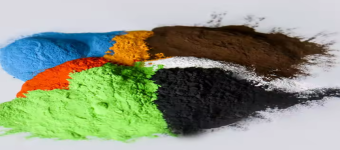
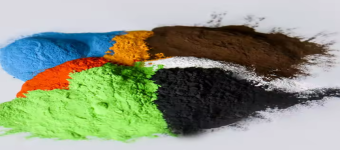
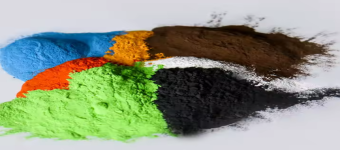
PVC powder coatings are available in various colors and finishes, including:
High-gloss finishes
Matte finishes
Safety yellow
Engineering green
Customized colors
These coatings not only improve appearance but also serve as visual safety indicators for industrial and public facilities.
Due to their flexibility, corrosion resistance, and economic advantages, PVC powder coatings are widely used in the following industries.
1. Wire Products and Hardware Components
Common applications include:
Wire baskets
Storage racks
Shopping carts
Wire shelving
Springs
Metal mesh products
The coating maintains flexibility while providing a smooth and durable surface.
2. Outdoor Protective Facilities
Applications include:
Highway guardrails
Security fencing
Isolation barriers
Wire mesh fencing
Fence posts
These structures benefit from long-term UV resistance and corrosion protection, especially in coastal environments.
3. Pipelines and Corrosion Protection Systems
PVC powder coatings are commonly used on:
Water supply pipelines
Drainage pipes
Chemical processing pipelines
Valves
Industrial piping systems
Thick-film coatings provide excellent protection against:
Water exposure
Chemicals
Acids and alkalis
Environmental corrosion
4. Industrial and Municipal Applications
Applications include:
Warehouse racking systems
Road sign posts
Agricultural machinery guards
Industrial equipment components
The coatings provide both protective and visual identification functions while maintaining excellent cost performance.
Selecting the appropriate PVC powder coating requires careful evaluation of the application requirements.
1. Consider Flexibility Requirements
High-Deformation Components
For applications such as:
Wire baskets
Springs
Flexible wire products
Choose formulations with higher plasticizer content to achieve maximum flexibility.
Low-Deformation, High-Impact Applications
For applications such as:
Pipelines
Storage tanks
Industrial structures
Choose formulations with lower plasticizer content to obtain higher hardness and impact resistance.
2. Consider the Service Environment
Outdoor Exposure
For applications such as:
Fencing systems
Coastal installations
Outdoor facilities
Select weather-resistant PVC formulations containing:
UV absorbers
Anti-aging stabilizers
Indoor or Water-Service Applications
For applications such as:
Water pipelines
Industrial equipment
Standard PVC powder coatings are generally sufficient, provided they offer good water and chemical resistance.
3. Consider Primer Requirements
Most Metal Substrates
PVC powder coatings typically require:
Epoxy primers
Specialized adhesion-promoting primers
to achieve satisfactory adhesion.
Primer-Free Systems
Some advanced formulations can be applied directly to properly prepared substrates, although they generally involve higher material costs.
4. Consider Process Compatibility and Cost
Application Equipment
Verify that the available equipment can achieve the required coating thickness.
Common application methods include:
Fluidized bed dipping
Electrostatic spraying
Target coating thickness is typically:
150–300 μm
Total Cost Evaluation
While PVC powder coatings offer low material costs, total project costs should also consider:
Primer requirements
Heating energy consumption
Production efficiency
Maintenance costs
PVC coatings typically melt and flow at approximately:
180–200°C
1. Poor Adhesion
Causes
Missing or incompatible primer
Inadequate surface preparation
Oil contamination or rust
Excessive coating thickness exceeding 300 μm
Solutions
Use a compatible epoxy primer
Improve degreasing, blasting, or phosphating processes
Control coating thickness within 150–250 μm
2. Coating Cracking
Causes
Insufficient plasticizer content
Aged powder coating material
Excessive deformation of the workpiece
Solutions
Select high-flexibility formulations
Monitor powder shelf life (typically 6–12 months)
Avoid sharp bending radii in component design
3. Blistering and Pinholes
Causes
Excessive curing temperature or time
Moisture contamination on the substrate
Excessively thick coatings exceeding 350 μm
Solutions
Maintain curing conditions within the recommended range of 180–200°C for 10–15 minutes
Improve substrate drying procedures
Apply multiple thinner coating layers rather than a single excessively thick coat
4. Color Discoloration
Causes
Overheating during curing
Stabilizer degradation
Poor pigment heat resistance
Solutions
Use oven temperature profiling equipment
Select heat-resistant pigments and stabilizers
Limit reclaimed powder content to 20% or less
5. Orange Peel and Poor Flow
Causes
Excessively coarse powder particle size
High melt viscosity
Inadequate spray atomization
Solutions
Select powders with a particle size distribution of approximately D50 35–45 μm
Increase curing temperature by 5–10°C if appropriate
Adjust spray gun air pressure to 0.3–0.5 MPa
Conclusion
PVC powder coatings provide an excellent combination of flexibility, corrosion resistance, durability, repairability, and cost-effectiveness. Their unique thermoplastic characteristics allow for thick protective coatings, easy repair, and long-term performance in both indoor and outdoor environments.
From wire products and protective fencing to industrial pipelines and municipal infrastructure, PVC powder coatings continue to be a reliable and economical solution for corrosion protection and decorative finishing.
If you encounter challenges during the application of PVC powder coatings, professional technical support and proper product selection can help optimize coating performance and production efficiency. We welcome your inquiries regarding powder coating products, industry standards, application methods, and customized solutions. Our team is ready to provide detailed technical information, product documentation, demonstration videos, and tailored recommendations to help you fully understand the capabilities and advantages of PVC powder coatings.



Company Phone
+86-21-6420 0566
Working hours
Monday to Friday
Mobile phone:
13816217984
Email:
info@qinsun-lab.com