Time: Popularity:0times
The dual-layer epoxy anti-corrosion powder coating adopts an integrated structure consisting of a bottom anti-corrosion layer and a top mechanical damage-resistant layer. While maintaining excellent anti-corrosion performance, it significantly enhances impact resistance, scratch resistance, and anti-permeability. It is fully compatible with cathodic protection systems and poses no shielding risk, making it highly valuable in engineering applications.
This article systematically introduces the concept, characteristics, functions, application fields, selection considerations, and common troubleshooting methods of dual-layer epoxy anti-corrosion powder coatings. It focuses on the application fields of dual-layer epoxy anti-corrosion powder coatings to help readers better understand what they are, their characteristics, and their functions.
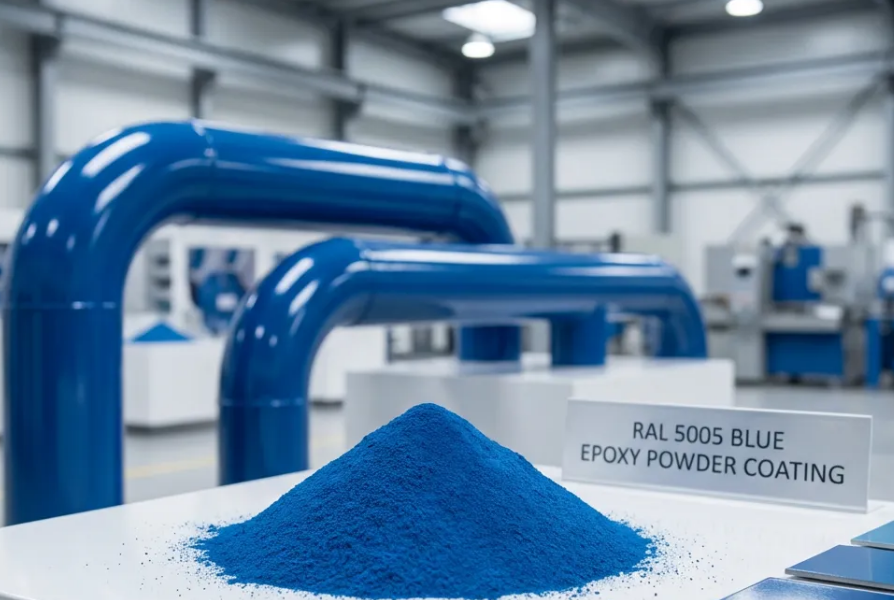
Dual-layer epoxy anti-corrosion powder coating is a composite anti-corrosion coating system formed on metal surfaces (mainly steel pipes) through a single coating process, consisting of two functional layers of fusion-bonded epoxy (FBE) powder coatings.
It is a precisely engineered dual-layer system. The bottom layer is a standard fusion-bonded epoxy coating that provides strong adhesion to the steel substrate and basic corrosion protection. The top layer is specially modified to address the mechanical weaknesses of single-layer FBE during transportation and construction, offering enhanced mechanical damage resistance, wear resistance, high-temperature anti-permeation performance, and excellent cathodic disbondment resistance.
Strong adhesion with bottom corrosion protection: The bottom layer is standard fusion-bonded epoxy (FBE). After curing, it forms chemical bonding with the steel substrate, providing extremely strong adhesion (peel strength typically ≥ 100 N/cm), excellent cathodic disbondment resistance, and basic corrosion protection.
Mechanical damage resistance of top layer: The modified top layer significantly improves impact resistance, scratch resistance, and wear resistance, effectively protecting pipelines from mechanical damage during transportation, lifting, and backfilling.
Excellent high-temperature anti-permeation performance: The dense top layer effectively blocks moisture and corrosive media penetration, maintaining stable protection performance even at operating temperatures up to 115°C.
Integrated process: The two powder layers are completed in the factory through a single heating process with either one coating step or two coating steps followed by one curing cycle, without the need for complex primers or adhesive layers, making process control relatively simple.
Cathodic protection compatibility: Like single-layer FBE, the dual-layer epoxy system is fully compatible with cathodic protection systems, without disbondment or shielding effects, ensuring long-term underground pipeline protection.
Bottom anti-corrosion protection: The fusion-bonded epoxy bottom layer forms a strong chemical bond with the steel substrate, providing excellent cathodic disbondment resistance and basic corrosion protection, preventing soil moisture and chemical media from attacking the pipe.
Top layer mechanical protection: The modified epoxy top layer provides high impact resistance, scratch resistance, and wear resistance, protecting pipelines from damage during transportation, lifting, stacking, and backfilling.
High-temperature anti-permeation: The dense structure of the top layer effectively prevents moisture and corrosive media penetration, ensuring stable anti-corrosion performance even at operating temperatures up to 115°C.
Cathodic protection compatibility: The entire coating system is fully compatible with cathodic protection, without shielding effects, ensuring synergistic long-term corrosion protection for underground pipelines.
Oil and gas long-distance pipelines: The core application area, used for internal and external corrosion protection of onshore and offshore pipelines, especially in crossing sections (rivers, highways, railways) and horizontal directional drilling sections where high scratch and bending resistance are required.
Urban pipeline networks and municipal engineering: Used for urban gas pipelines, water supply pipelines, and heating pipelines. In densely built urban environments with frequent construction interference, the enhanced surface layer reduces repair rates caused by mechanical damage.
Special operating condition pipelines: Suitable for high-temperature pipelines (≤115°C), high-salinity marine environments, and acidic (pH < 5) or highly corrosive soil conditions, providing more reliable long-term protection.
Selection of Dual-Layer Epoxy Anti-Corrosion Powder Coating
Operating environment and construction conditions:
Normal buried environments: total thickness ≥ 525 μm (bottom ≥ 175 μm, top ≥ 350 μm).
Severe mechanical stress areas (mountainous rock sections, river crossings, HDD sections): reinforced structure ≥ 825 μm (bottom ≥ 275 μm, top ≥ 550 μm).
High-temperature pipelines: verify service temperature (typically up to 115°C).
Corrosion grade and coating thickness:
Total coating thickness typically ranges from 525–1000 μm. Industry standards such as SY/T 0315 or GB/T 39636 should be referenced.
Performance requirements:
Impact resistance: ≥ 3 J (23°C ± 2°C).
Cathodic disbondment: ≤ 6.5 mm (65°C, 48 h).
Adhesion: Grade 1.
Flexibility: no cracking at 2.5° bending at -30°C.
Application process and compatibility:
Surface preparation: Sa2½ grade sandblasting or shot blasting, anchor profile 40–100 μm.
Coating process: single-pass application before gelation of bottom layer.
Field joint compatibility: must match system performance requirements.
Impact cracking or peeling after testing:
Ensure high-impact-resistant top layer formulation; avoid over-curing; maintain uniform preheating (200–240°C).
Cathodic disbondment failure:
Verify standard FBE bottom layer; strictly control curing time and temperature; ensure Sa2½ surface cleanliness.
Interlayer adhesion failure:
Control timing between bottom gelation and top application (typically within 30–90 seconds); maintain proper substrate temperature (190–230°C).
Pipe-end coating lifting:
Use tapered edge design; gradually reduce coating thickness at pipe ends; avoid aggressive grinding.
If you encounter any issues during the use of dual-layer epoxy anti-corrosion powder coatings, please feel free to contact us for professional technical support and solutions.
We hope this article provides a reliable and professional reference for the powder coating industry. We sincerely welcome inquiries regarding product performance, industry standards, application methods, precautions, or any related questions. Please feel free to leave a message or contact us directly so that we can provide detailed product information, demonstration videos, or customized solutions to help you fully understand the features and advantages of our products.



Company Phone
+86-21-6420 0566
Working hours
Monday to Friday
Mobile phone:
13816217984
Email:
info@qinsun-lab.com