Time: Popularity:0times
Steel drum powder coating is an environmentally friendly protective coating material based on epoxy, polyester, or epoxy-polyester hybrid systems. It contains 100% solids and has zero VOCs. It is specifically designed for coating the inner and outer surfaces of steel drums, such as chemical drums and food drums, and must meet requirements for chemical corrosion resistance, impact resistance, strong adhesion, and compliance with the regulations applicable to the contents.
This article systematically introduces the concept, characteristics, functions, selection considerations, and solutions to common problems associated with steel drum powder coating. It focuses on the specific functions of steel drum powder coating to help readers better understand what steel drum powder coating is and what characteristics it offers.
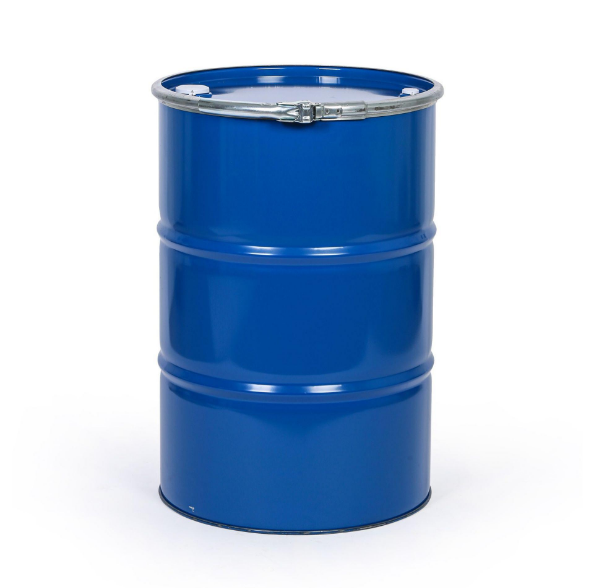
Steel drum powder coating refers to a thermosetting powder coating that uses epoxy resin, particularly bisphenol A epoxy resin, as its primary film-forming material. It contains 100% solids and no organic solvents. It is applied to the inner or outer surfaces of steel drums through electrostatic spraying or other methods, then heated to melt and cure, forming a continuous coating film.
The chemical properties of the contents stored in steel drums determine the need for a customized corrosion-resistant barrier. Interior coatings must also meet compliance requirements for food contact or compatibility with specific chemicals.
The main characteristics of steel drum powder coating are as follows.
Chemical corrosion resistance tailored to the contents: Epoxy coatings have a high crosslinking density and can provide a barrier against various chemical media. However, the formulation must be adjusted according to the contents. Industrial chemicals require broad-spectrum chemical resistance, while food contents require resistance to long-term penetration by acidic substances.
A narrow film-thickness window and uniformity that directly affects performance: The effective interior coating thickness is determined by the thinnest point. If the coating is too thin, penetration may occur; if it is too thick, cracking may result. Therefore, controlling film-thickness uniformity during application is itself a performance requirement.
Mechanical performance balancing adhesion and flexibility: Steel drums are subjected to mechanical stress during transportation, stacking, and seaming. The coating must adhere firmly while remaining flexible enough to prevent peeling and cracking.
Additional compliance requirements for food-contact applications: When used for food storage, the interior coating must meet applicable food-contact requirements. The degree of curing directly affects its chemical resistance and adhesion.
The main functions of steel drum powder coating are reflected in the following aspects:
1. Interior Corrosion Protection and Isolation: A Barrier Tailored to the Contents
This is its most fundamental function. Early steel drums were used only to store petroleum products and did not require interior coatings. As the variety of chemical products increased, materials prone to leakage or penetration, such as turpentine, created a need for corrosion protection inside steel drums. Epoxy powder electrostatic spraying was subsequently introduced. The coating isolates the metal substrate from the contents, preventing media such as acids, alkalis, and solvents from corroding the drum. For acidic foods such as tomato paste, olives, and cherries, the epoxy coating helps prevent reactions between food acids and the metal, thereby reducing the risk of contamination of the contents or corrosion of the drum.
2. Resistance to Penetration and Contamination Prevention: The Thinnest Point as the Minimum Effective Barrier
The corrosion-protection performance of an interior coating does not depend on its average thickness but on the coating thickness at the thinnest point inside the drum. Once penetration and corrosion occur at the thinnest point, the entire steel drum loses its corrosion-protection function, regardless of how thick the coating is elsewhere. Therefore, the coating must form a continuous film across the entire interior surface, including the drum body, bottom, and lid, without thin spots or pinholes, blocking pathways through which the contents could penetrate to the metal interface.
When selecting steel drum powder coating, we may face uncertainty about which product to choose. Based on our industry experience, we recommend focusing on the following aspects.
1. Determine the Chemical Resistance Profile Based on the Contents
Steel drum powder coatings are almost always based on epoxy systems, but “epoxy” is only the base chemistry. The actual selection depends on what the drum will contain.
Industrial chemicals: Broad-spectrum chemical resistance is the priority. Ask the supplier for resistance data or recommendations for the specific media to be stored, such as acids, alkalis, solvents, and oils or fats. A typical reference film thickness for industrial-grade epoxy powder linings in steel drums is 60–70 μm. Confirm that the coating's resistance to the target chemicals is supported by relevant data.
Food products, such as sauces, olives, and acidic materials: In addition to corrosion protection, the interior coating must meet food-contact compliance requirements. During product selection, confirm that the product has the relevant compliance declaration or certification.
2. Verify Compliance Credentials and Film-Thickness Control
Food-contact applications: Require the supplier to provide clear evidence of compliance. In international projects, a “FDA compliant” declaration, indicating compliance with FDA 21 CFR 175.300. is commonly used rather than “FDA approved.” The FDA does not itself “approve” materials in this context; compliance is determined by the formulation supplier. For steel drums intended for commercial food contact, consider whether NSF/ANSI 51 certification is available as additional supporting evidence. Products without the relevant compliance documentation should be excluded, regardless of how good their performance data may be.
Film-thickness control capability: The effective corrosion-protection thickness of an interior steel drum coating is determined by the thinnest point, not the average thickness. If penetration occurs at the thinnest point, the entire drum may fail. Therefore, when selecting a product, confirm that the powder can form a uniform coating film on the interior surfaces of steel drums. A typical reference film thickness for industrial chemical linings is 60–70 μm. Historical patent data for food-contact applications indicate that film thickness may need to be controlled within a narrow range of approximately 1.5–3.0 mils (about 38–76 μm). Excessive thickness may cause cracking, while insufficient thickness may allow penetration.
3. Match Curing Conditions and Application Methods
Confirm that the curing temperature and time of the selected powder are compatible with the existing steel drum coating line. Curing conditions vary considerably among products. Some products recommend 200°C for 10 minutes or 230°C for 6 minutes, while certain steel drum interior-coating processes use 175°C for 20 minutes. If the curing conditions do not match the production line, forced adjustments may result in insufficient curing, directly weakening chemical resistance and adhesion.
The most common problems encountered when using steel drum powder coating are mainly reflected in the following aspects. Based on our industry experience, we propose targeted solutions to help effectively resolve powder coating problems you may encounter.
1. Pinholes and Bubbles (Failure of the Interior Barrier)
Problem Description
Small through-holes or holes extending down to the substrate left by ruptured bubbles appear on the coating surface. For steel drums containing corrosive materials, any pinhole that exposes the substrate means that the metal at that point is directly exposed and the corrosion-protection barrier has completely failed there.
Possible Causes
Residual contaminants from pretreatment are a major cause. Rust may not have been completely removed from the substrate, or inadequate rinsing after phosphating may leave residual solution. During baking, volatile substances can break through the molten coating and form pinholes. In addition, if bubbles inside the coating are not eliminated promptly during the melting or curing stage, they may rupture as the coating cools, leaving holes.
Solutions
Strengthen pretreatment: When rust is severe, remove it by grinding or pickling. Strengthen rinsing after phosphating to eliminate residual solution.
Repair after melting: Before proceeding to the cooling stage, remove bubbles or repair holes that have already ruptured to effectively prevent coating defects from forming after cooling.
Inspect finished products for pinholes: Conduct holiday testing on the interior coating using a high-voltage spark tester and promptly repair any points where the substrate is exposed.
2. Cratering (Localized Poor Wetting)
Problem Description
Volcano-shaped depressions appear on the coating surface and may extend down to the substrate in severe cases. The missing coating at these craters creates pathways through which corrosive media can penetrate.
Possible Causes
Cratering is caused by contaminants whose surface tension is lower than that of the molten powder. Sources include oil and water in compressed air, pretreatment residues, deposits in the powder spraying system, and cross-contamination between different powders.
Solutions
Purify the air supply: Ensure that compressed air is thoroughly free of oil and water.
Maintain a clean environment and equipment: Clean the spray booth and curing oven regularly to prevent contaminants from falling onto the coating.
Manage powder materials: Avoid mixing powders from different systems and keep the proportion of recovered powder within a reasonable range.
3. Insufficient Adhesion (Poor Pretreatment)
Problem Description
The coating does not bond firmly to the steel drum substrate. It may detach during cross-cut testing or peel after seaming or stacking. Even an intact coating with poor adhesion cannot effectively perform its corrosion-protection function.
Possible Causes
Incomplete degreasing, particularly when mineral oil requires the use of an emulsifier, an excessively thick or rough phosphate coating, and inadequate rinsing that leaves chemical residues can all weaken the bond between the coating and the substrate. Phosphate coatings have an appropriate thickness range; excessive thickness can adversely affect flexibility and adhesion.
Solutions
Degreasing process: Use alkaline chemical degreasing together with an emulsifier, followed by a final rinse with deionized water.
Phosphating control: Select a medium-temperature zinc-calcium phosphating solution and control the coating thickness within an appropriate range. Passivation after phosphating can improve adhesion and corrosion resistance.
Ensure proper curing: Confirm that the actual workpiece temperature and curing time meet the requirements rather than relying solely on the oven's set temperature.
4. Coating Contaminants and Particles
Problem Description
Raised particles or black specks appear across the coating surface, affecting appearance and potentially creating localized weak points.
Possible Causes
Potential causes include deposits on the inner walls of the curing oven and the suspension conveyor, dust and fibers in the spray booth, impurities or uneven pigment dispersion in the powder itself, and residual phosphating sludge.
Solutions
Clean the curing oven: Thoroughly clean the inner walls with a damp cloth and vacuum cleaner, paying particular attention to whether the filters in the air supply ducts are damaged.
Perform daily cleaning of the powder spraying system: Blow down the system with compressed air before starting work each day and keep the spray booth clean.
Maintain the phosphating tank: Remove phosphating sludge promptly to prevent large particles from entering the coating.
Customized Powder Coating Solutions for Steel Drums
We provide powder coating solutions for steel drums and metal containers that combine corrosion resistance, wear resistance, and excellent adhesion. Based on the steel drum material, operating environment, storage media, and coating process requirements, we can provide professional product selection and customization services to meet the coating protection and appearance requirements of different steel drum products. Contact us to obtain a powder coating solution tailored to your application needs.


Company Phone
+86-21-6420 0566
Working hours
Monday to Friday
Mobile phone:
13816217984
Email:
info@qinsun-lab.com