Time: Popularity:0times
Introduction
In the intricate world of modern electronics, from the humming power supply in your computer to the charging system of an electric vehicle, efficiency and reliability are non-negotiable. At the heart of many of these power conversion systems lies an unsung hero: the electronic iron powder core. These cores are the workhorses that manage magnetic flux, but their performance is only as good as the material that holds them together. That critical component is the Bonding Powder for Electronic Iron Powder Cores. This isn't just an adhesive; it's a sophisticated, engineered polymer system that transforms loose, insulated iron particles into a robust, high-performance component. Choosing the right Bonding Powder for Electronic Iron Powder Cores directly impacts electrical efficiency, mechanical stability, and long-term reliability. This guide will explain why this specialized material is essential and how to select the optimal formulation for your application.
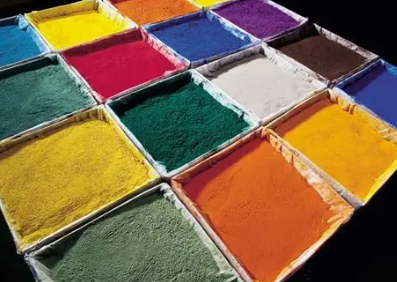
Think of the bonding powder as the architectural framework of a building. It doesn't just hold the iron particles in place; it defines the core's structural integrity, thermal behavior, and ultimately, its electrical performance. A high-quality Bonding Powder for Electronic Iron Powder Cores is a thermosetting epoxy-modified system, carefully formulated with specific resins and functional curing agents.
This chemistry is designed for a delicate balance. The powder must coat each individual insulated particle uniformly, creating a strong mechanical bond after curing without compromising the vital electrical insulation between particles. This prevents the destructive phenomenon of eddy currents, which can lead to energy loss and overheating. The ideal Bonding Powder for Electronic Iron Powder Cores achieves high cross-link density during curing, resulting in a component with exceptional mechanical strength, minimal shrinkage for dimensional stability, and excellent resistance to thermal and chemical stress. It's the foundation upon which magnetic performance is built.
When evaluating a Bonding Powder for Electronic Iron Powder Cores, several critical properties separate a standard binder from a high-performance enabler.
The core's electrical properties are paramount. A superior bonding powder exhibits a very high glass transition temperature (Tg) and maintains stable dielectric properties across a wide operational range, typically from -65°C to over 110°C. This ensures that the core's inductance and other key parameters remain consistent even under the thermal stress of a busy power circuit. The cured binder must also have excellent chemical and solvent resistance to withstand any potential environmental exposure, guaranteeing long-term reliability.
From the production floor to the end product, the bonding powder must facilitate—not hinder—the process. It offers excellent dispersibility and lubricity when mixed with the metal powder. This ensures a homogeneous blend, reduces friction during the pressing (molding) stage for higher part density and precision, and minimizes wear on expensive tooling. After curing, the result is a core with a smooth, dense surface, high rigidity, and outstanding mechanical strength that can withstand the vibrations and physical demands of assembly and operation.
Selecting the right Bonding Powder for Electronic Iron Powder Cores is not one-size-fits-all. The optimal choice depends heavily on the core's intended application and performance requirements.
These components, common in switch-mode power supplies (SMPS) and DC-DC converters, operate at frequencies from tens of kilohertz to several megahertz.
Key Requirements: Low core loss (to maximize efficiency and minimize heat), stable inductance over frequency and temperature, and good mechanical strength for automated assembly.
Recommended Bonding Powder Focus: Look for a formulation that promises minimal impact on high-frequency permeability and offers very low dissipation factor (low loss). The binder's ability to achieve a uniform, thin layer around each particle is critical here to keep eddy current losses to an absolute minimum.
Power Factor Correction (PFC) chokes and inductors for motor drives handle significant AC current and flux swings, often generating more heat.
Key Requirements: Excellent thermal stability to maintain properties at elevated temperatures, high saturation flux density (to handle high current without saturating), and robust mechanical integrity.
Recommended Bonding Powder Focus: Prioritize powders with a high glass transition temperature (Tg > 130°C is a good target) and proven performance over a wide temperature range. The binder must have strong adhesion to prevent degradation under thermal cycling stress.
These cores are designed to attenuate electromagnetic interference across a broad frequency spectrum.
Key Requirements: Consistent and predictable complex permeability across the target frequency range, good dimensional stability for toroidal or other shaped cores, and resistance to environmental humidity.
Recommended Bonding Powder Focus: Choose a binder known for its excellent moisture resistance and dielectric properties. The dimensional stability (low shrinkage) of the cured binder is also crucial to maintain precise geometric tolerances, which can affect the filter's frequency response.
Integrating a new Bonding Powder for Electronic Iron Powder Cores into your production requires attention to process details to unlock its full potential.
1. Precision Mixing: The bonding powder is typically added at 15-30% by volume of the total metal powder mix. Accurate, controlled mixing in a high-shear mixer is essential to achieve a completely homogeneous distribution of binder on every iron particle. This step directly influences the consistency and final performance of every core.
2. Controlled Molding and Curing: After pressing, the "green" cores must be cured. Precisely follow the manufacturer's recommended curing schedule, paying close attention that the part temperature reaches the specified level (e.g., referenced to workpiece temperature) for the correct duration. A properly calibrated oven with good temperature uniformity is vital. Under-curing leads to weak cores; over-curing can degrade binder properties.
3. Quality Validation: Always conduct thorough testing on pilot batches. Go beyond standard electrical tests (inductance, Q factor, core loss). Perform mechanical tests like crush strength and check for surface integrity. Thermal cycling tests can reveal the robustness of the bond under stress. This validation ensures the Bonding Powder for Electronic Iron Powder Cores delivers the expected performance in your specific formulation and process.
In the quest for smaller, more efficient, and more reliable power electronics, every material choice matters. The Bonding Powder for Electronic Iron Powder Cores is a foundational element that goes far beyond simple adhesion. It is a precision-engineered material that dictates the mechanical integrity, thermal resilience, and ultimate electrical efficiency of the magnetic core. By understanding its critical role and carefully selecting a powder based on your application's specific demands—be it high-frequency operation, high-temperature stability, or broad-spectrum EMI filtering—you empower your designs to perform at their peak. Investing time in proper process integration and validation with a high-performance Bonding Powder for Electronic Iron Powder Cores is an investment in product quality, reliability, and performance that will distinguish your components in a competitive market.



Company Phone
+86-21-6420 0566
Working hours
Monday to Friday
Mobile phone:
13816217984
Email:
info@qinsun-lab.com